
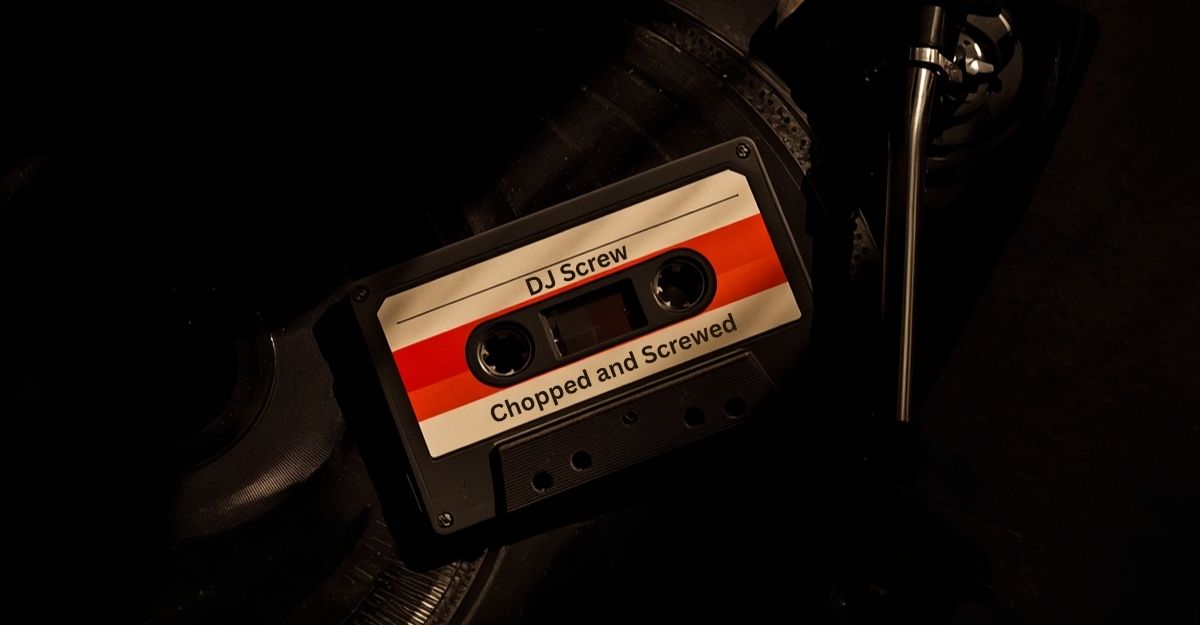
If you spend enough time crate-digging in the dusty, poorly lit record shops of the world, you quickly realize that certain dates carry a mythological weight in music history. For the global electronic and hip-hop communities, one date stands above the rest. As the Google search algorithms exploded over the past 24 hours, millions of fans were reminded of the absolute cultural earthquake that is the DJ Screw June 27th legacy.
As the Managing Editor of this platform, I spend most of my time analyzing the high-end luxury lifestyles of the modern DJ elite. We talk about $50 million mansions, rotary mixers, and exclusive VIP festival tents. But none of this global, multi-billion-dollar DJ economy exists without the raw, underground pioneers who physically manipulated sound in their living rooms.
Robert Earl Davis Jr., known globally as DJ Screw, was a sonic architect. He didn’t just mix records; he invented an entirely new psychedelic sub-genre. In 2026, the slow, narcotic, bass-heavy aesthetic he created on a cassette deck in Houston, Texas, is still heavily referenced by top-tier producers from Ibiza to Los Angeles. Here is exactly why the legendary June 27th tape remains a cornerstone of modern analog DJ culture.
1. The Origin of the DJ Screw June 27th Mixtape
To understand the massive search spikes happening right now, you have to go back to 1996. The “June 27th” tape, formally known as Chapter 12: June 27th, was originally recorded to celebrate the birthday of DeMo, a prominent figure in the Houston hip-hop scene.
What happened in DJ Screw’s living room that night is the stuff of legend. Over a pitched-down, hypnotic beat (famously sampling Kriss Kross’s “Da Streets Ain’t Right”), a rotating cast of Screwed Up Click members passed the microphone for a staggering 35-minute freestyle. It was raw, unedited, and deeply authentic. In an era before digital streaming, this grey cassette tape spread entirely through word of mouth and the trunks of cars, becoming a massive regional anthem before infecting the entire global music industry.
The DJ Screw June 27th tape is the ultimate proof that true cultural movements cannot be manufactured in a corporate boardroom. They are born in the underground, fueled by community, and captured on analog tape.
2. Chopped and Screwed: The Original Analog Manipulation
In 2026, any teenager with a laptop can download a digital plugin to pitch a track down or add a stutter effect. But DJ Screw was doing this mechanically, by hand, using physical turntables and a four-track cassette recorder.
The “chopped and screwed” technique involved slowing a record down to around 60 or 70 beats per minute, deeply dropping the pitch of the vocals, and rhythmically skipping (chopping) the crossfader to create a heavy, stuttering, psychedelic effect. It turned upbeat party tracks into dark, atmospheric soundscapes.
For the modern audiophile elite who are currently driving the global vinyl resurgence, DJ Screw is viewed as an analog god. He treated the turntable not just as a playback device, but as an active, physical instrument. The meticulous hand-craftsmanship required to build a chopped and screwed mixtape on physical tape is something today’s top electronic producers deeply revere.
3. The Cross-Pollination of Hip-Hop and Club Culture
Historically, hip-hop and electronic dance music were often treated as separate ecosystems. But as publications like Pitchfork have documented for years, the boundaries have completely dissolved. The bridge between these two worlds was built on the foundation of heavy bass and slowed-down tempos.
When you hear a headline electronic producer drop a heavy, halftime trap beat at a massive festival like Tomorrowland or Coachella, they are directly pulling from the sonic blueprint laid down by Houston’s Screwed Up Click. The heavy sub-bass, the distorted, pitched-down vocal chops, and the dark, narcotic atmosphere native to underground warehouse raves are deeply indebted to DJ Screw. He proved that slowing down the tempo doesn’t kill the dancefloor; it actually creates a deeper, more visceral physical reaction.
4. The Fetishization of the Physical Mixtape in 2026
As we track the luxury audio trends of 2026, we are seeing a massive rebellion against the infinite, clinical perfection of digital streaming. In elite listening bars across Tokyo and London, collectors are no longer just hunting for rare vinyl they are hunting for original, authenticated physical cassettes.
Original “Grey Tapes” (the personal mixtapes sold directly by DJ Screw out of his house or at his Houston shop, Screwed Up Records and Tapes) are now considered high-end, luxury collector’s items. They are traded on secondary markets for thousands of dollars. Why? Because an original DJ Screw tape represents pure, unreplicable scarcity.
You cannot stream the authentic tape hiss, the slight analog warble, or the specific acoustic characteristics of that original magnetic tape. Owning an original June 27th cassette in 2026 is the music equivalent of owning an original Basquiat painting. It is raw, street-level art that has fully penetrated the high-art establishment.
5. The Enduring Legacy of Robert Earl Davis Jr.
Tragically, DJ Screw did not live to see the global, multi-billion-dollar empire that his sound would eventually influence. He passed away on November 16, 2000, at the age of 29.
Yet, as the massive spikes in internet traffic prove every single year on June 27th, his influence has only amplified over time. He is referenced by chart-topping pop stars, sampled by elite electronic music producers, and studied by modern audio engineers. He took the existing technology of the DJ booth and broke the rules, creating a sound so unique that it permanently altered the trajectory of modern music.
The underground club kids, the hip-hop purists, and the modern VIP festival elites all owe a massive debt to the slow, heavy groove of Houston, Texas. Long live the originator.
FAQ
To help our readers understand the massive search trends surrounding this hip-hop and DJ pioneer, our editorial desk has answered the most commonly searched questions regarding DJ Screw.
Why is June 27th a holiday in hip-hop and DJ culture?
June 27th is celebrated due to the legendary DJ Screw June 27th mixtape (officially Chapter 12: June 27th). Recorded on June 27, 1996, to celebrate the birthday of local Houston figure DeMo, the tape features a legendary 35-minute continuous freestyle that became a defining anthem for the chopped and screwed movement.
What is the “Chopped and Screwed” technique?
Invented by DJ Screw in the early 1990s, the technique involves drastically slowing down a record’s tempo (pitching it down) to create a dark, sluggish, and atmospheric sound. The DJ then “chops” the record by repeating specific beats or vocal phrases using the crossfader on two turntables, creating a psychedelic audio effect.
When did DJ Screw die?
Robert Earl Davis Jr., known as DJ Screw, died on November 16, 2000. He was only 29 years old. Despite his short career, his massive output of mixtapes secured his place as a pioneer in global music history.
What was DJ Screw’s cause of death?
According to official reports, DJ Screw’s cause of death was a codeine overdose combined with mixed drug intoxication (including Valium and PCP). His death brought significant attention to the dangers of “purple drank” (lean), a mixture of prescription cough syrup and soda that was heavily referenced in the Houston music scene.

Sahil Chopra is a digital media specialist and the Managing Editor of Hercules & Love Affair. Backed by a formal diploma in Film & Television Direction from the Asian Academy of Film and Television (AAFT) and a degree in Business Management, Sahil combines his artistic vision with over four years of digital publishing expertise. He specializes in tracking the exact intersection where underground club culture meets high-end luxury lifestyle. Having closely followed the global electronic music scene from its early blog-era roots, Sahil now leads the editorial vision for the platform—curating everything from breaking entertainment news and VIP festival guides to exclusive looks inside celebrity culture. When he isn’t steering the newsroom, he is hunting down rare vinyl records and keeping a close eye on global fashion weeks.