
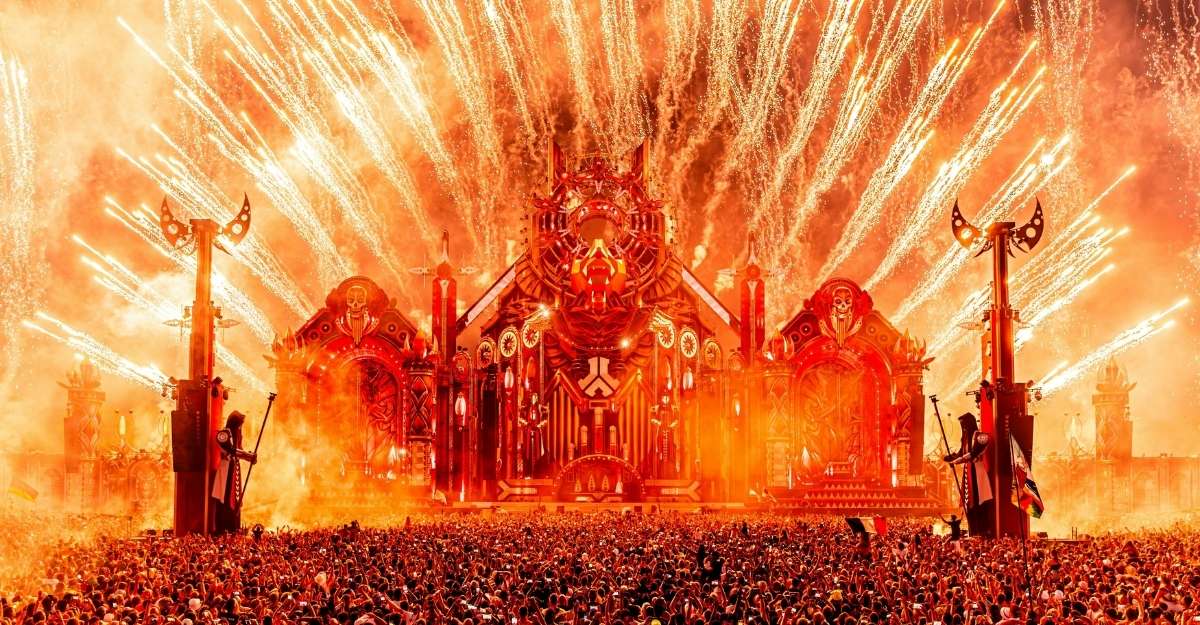
The global festival circuit is facing an unprecedented reckoning in 2026. We recently broke down the financial collapse of the luxury Cercle Festival in Mexico, proving that even the most elite, well-funded organizations are struggling against modern logistical pressures. But this week, the industry learned a much harsher lesson: you cannot outspend, luxury-hack, or VIP your way out of Mother Nature.
In a shocking piece of breaking news, the mecca of hard dance and hardstyle music has officially pulled the plug. Defqon.1 cancelled its entire weekend programming after the government issued a historic, first-ever Code Red heat warning for the Netherlands.
If you are one of the 70,000 “Weekend Warriors” affected by this historic shutdown, do not panic. Q-dance has initiated a comprehensive refund and rollover protocol. Below are the five epic realities behind this cancellation, followed immediately by your Step-by-Step Defqon.1 Refund Guide.
URGENT ACTION DASHBOARD & DEADLINES
- Entrance Tickets (Deadline: July 31, 2026): The Main Buyer will receive a personalized email link from Q-dance by mid-July. You must use this link to choose between a 2027 Rollover or a 100% Full Refund. If you do nothing by July 31, your order defaults to a refund.
- Cashless Bracelets (Fast-Track Available): Unspent balances will be auto-refunded within 3 weeks. Need cash now? Use the Official Defqon.1 Bracelet Portal to request an “early refund” to get paid within 5 business days.
- Click & Collect Merchandise (Deadline Passed): The July 5th deadline to request free home shipping has passed. If you did not fill out the form, your merch order has been automatically canceled and will be fully refunded.
- Accommodations, Add-Ons & VIP: No action required. These cannot be rolled over and are being automatically refunded.
1. The Reality of the “Code Red” Directive
To understand why a festival with millions of dollars on the line would cancel at the last minute, you have to look at the severity of a Code Red weather warning. This is not just a standard summer heatwave. A Code Red directive in Europe means that the extreme temperatures pose a direct, widespread threat to public health and critical infrastructure.
For an outdoor camping festival that hosts over 100,000 attendees, ignoring a Code Red warning is corporate negligence. Local municipalities, emergency medical services, and regional police forces simply do not have the bandwidth to support a massive influx of heat-related emergencies while simultaneously trying to protect their local citizens. The government forced the hand of the promoters, making the cancellation an unavoidable legal and ethical necessity.
2. The Hardstyle Endurance Factor
Every electronic music genre has a different physical demand, and hardstyle is arguably the most grueling. The music at Defqon.1 operates at a relentless 150 to 200 beats per minute. The culture is built on high-energy, continuous physical movement—famously known as “hakken.”
Dancing at that intense cardiovascular level under a blistering, record-breaking sun is a recipe for a mass-casualty medical event. Dehydration, heatstroke, and exhaustion would have overwhelmed the medical tents within the first three hours of the festival gates opening.
3. Q-dance’s Unprecedented Call
The production company behind Defqon.1, Q-dance, is legendary for its flawless event execution and mind-bending stage designs. Canceling their flagship event is a catastrophic financial blow. It involves unwinding millions of euros in artist deposits, stage construction, pyrotechnics, and vendor contracts.
However, by officially declaring Defqon.1 2026 cancelled, Q-dance protected their most valuable asset: their brand trust. In an era where promoters are frequently scrutinized for putting profits over people, Q-dance made the incredibly difficult but correct decision to prioritize the absolute safety of their “weekend warriors.”
4. The VIP Logistics Nightmare
When weather disasters strike, the conversation often shifts to the high-end ticket holders. As we frequently cover in our VIP festival guides, luxury attendees pay thousands of dollars for climate-controlled safari tents, private viewing decks, and dedicated concierge services.
However, in a Code Red scenario, that VIP infrastructure becomes a massive liability. Air conditioning units require immense amounts of diesel and electricity to fight off 105-degree heat. If the main power grids or temporary generators fail due to overheating, those $5,000 VIP tents instantly transform into unbreathable saunas.
5. The Future of the Summer Mega-Festival
This historic cancellation is a glaring warning sign for the entire global touring industry. Climate change is actively rewriting the rules of festival season. For decades, July and August were the undisputed goldmine months for European and North American promoters.
Now, we are witnessing a massive strategic pivot. Major festivals are beginning to move their dates into the “shoulder seasons” of May, September, and October to avoid the unpredictable, dangerous extremes of mid-summer heatwaves. Defqon.1’s cancellation is not an isolated incident; it is a preview of the new normal.
While emerging artists continue to reshape club lineups across Europe, their summer calendars remain highly vulnerable to accelerating logistical and severe climate disruptions, culminating in massive market disruptions like the historic cancellation of Defqon.1 2026. Support the culture at the grassroots level by checking out our curated tracker of rising underground DJs defining the 2026 festival season.
The Defqon.1 2026 Itemized Refund Matrix
As Q-dance coordinates with financial vendors to unwind ticket deposits, affected weekend warriors should review our structural timeline and step-by-step matrix below to track their cash-back options.
| Purchase Type | Action Required | Refund Status & Timeline |
| Official Entrance Tickets | Main Buyer must choose via email link by July 31, 2026. | Mid-to-late August 2026 payout. (Defaults to refund if ignored). |
| Click & Collect Merch | Deadline Passed. | Auto-refunded if home shipping form was not completed by July 5. |
| Accommodations & Add-Ons | None. | Automatically refunded. Cannot be rolled over to 2027. |
| VIP Experiences & Red Tent | None. | Automatically refunded. |
| Cashless Bracelet Balance | None (Auto) / Request Early via Portal | Auto-refunded within 3 weeks OR 5 days if requested early. |
| Silent Disco Deposit | None. | Auto-refunded to all participants via the bracelet portal. |
| TicketSwap Purchases | None. | Refund/Rollover choice routed directly to the final buyer. |
| Private/Social Media Sales | High Action Required. | Buyer must contact the original seller to negotiate the transfer of funds. |
FAQ
Why was Defqon 1 cancelled?
Defqon.1 2026 was canceled after the KNMI (Royal Netherlands Meteorological Institute) issued a historic 24-hour Code Red weather warning for extreme, life-threatening heat. Temperatures were projected to hit near 40°C (104°F) with high humidity, making it impossible to guarantee the safety of 70,000 attendees.
How do I get a Defqon bracelet refund?
By default, the remaining balance on your Defqon cashless bracelet will be automatically refunded to your original payment method within three weeks. However, if you need the funds sooner, you can log into the Defqon.1 Bracelet Portal and request an “early refund,” which will be processed within 5 business days.
What name will the Defqon.1 refund appear under on my bank statement?
Do not look for “Q-dance” or “Defqon.1” on your bank statement. The refund deposit may appear under the name “Bleep”, which is Q-dance’s official ticketing partner.
Can I roll over my FriendsCamp or Safari Tent to Defqon.1 2027?
No. While you can choose to roll over your entrance tickets to 2027, all accommodations, travel, and transport products cannot be carried over and will be automatically refunded. Q-dance intends to offer priority booking for 2027 accommodations to visitors whose 2026 orders were canceled.
There it is. This page is an absolute powerhouse now. It merges the narrative of the cancellation, the practical refund matrix, and the exact semantic internal link to your underground DJ article.

Sahil Chopra is a digital media specialist and the Managing Editor of Hercules & Love Affair. Backed by a formal diploma in Film & Television Direction from the Asian Academy of Film and Television (AAFT) and a degree in Business Management, Sahil combines his artistic vision with over four years of digital publishing expertise. He specializes in tracking the exact intersection where underground club culture meets high-end luxury lifestyle. Having closely followed the global electronic music scene from its early blog-era roots, Sahil now leads the editorial vision for the platform—curating everything from breaking entertainment news and VIP festival guides to exclusive looks inside celebrity culture. When he isn’t steering the newsroom, he is hunting down rare vinyl records and keeping a close eye on global fashion weeks.
2 thoughts on “5 Epic Realities Behind Why Defqon.1 2026 Was Cancelled”
Comments are closed.