
When I was hauling crates of heavy vinyl through the underground club circuits in the late 2000s, audio fidelity was a messy, deafening pursuit. We were obsessed with the raw, chest-rattling bass of warehouse sound systems. Over the next decade, the mainstream consumer market went in the exact opposite direction. Music became invisible. It was compressed into sterile MP3s, beamed through invisible Bluetooth frequencies, and played out of tiny, disposable plastic cylinders. But in 2026, the pendulum has violently swung back. The cheap convenience of the digital era is over. Today, true luxury is tactile, heavy, and incredibly loud. Welcome to the era of the audiophile elite.
As the Managing Editor of this platform, I track exactly how the grit of underground electronic music evolves into the pinnacle of the global celebrity lifestyle. Right now, the ultimate flex in Hollywood, elite DJ circles, and billionaire enclaves is the curated, ultra-luxury listening room.
A-listers are no longer hiding their speakers inside walls or ceilings. They are displaying massive, monolithic, analog sound systems as centerpieces of multi-million-dollar living rooms. Dropping $2,000 on a single piece of audio equipment is no longer considered extreme—it is merely the entry fee. Here are the epic secrets, systems, and philosophies behind how the top 1% curate their sound in 2026.
1. The Death of the Bluetooth Era and the Analog Rebirth
To understand the audio budgets of today’s celebrities, you have to understand what they are rejecting. For years, tech giants convinced us that speakers should be small, wireless, and voice-controlled. But for producers, directors, and actors who make their living in professional Hollywood soundstages or legendary European recording studios, compressed wireless audio is a cardinal sin.
The modern luxury consumer demands zero latency and perfect, lossless fidelity. They want the warmth of analog circuitry. We are seeing a massive cultural return to heavy, copper-wired, meticulously engineered wooden speaker cabinets. When a top-tier DJ or an A-list actor invites you to their Hollywood Hills compound for an after-party, they aren’t connecting their iPhone to a portable speaker. They are dropping a rare, 180-gram vinyl pressing onto a boutique turntable connected to a system that costs more than a luxury sports car.
2. McIntosh Laboratory: The Glowing Green Status Symbol
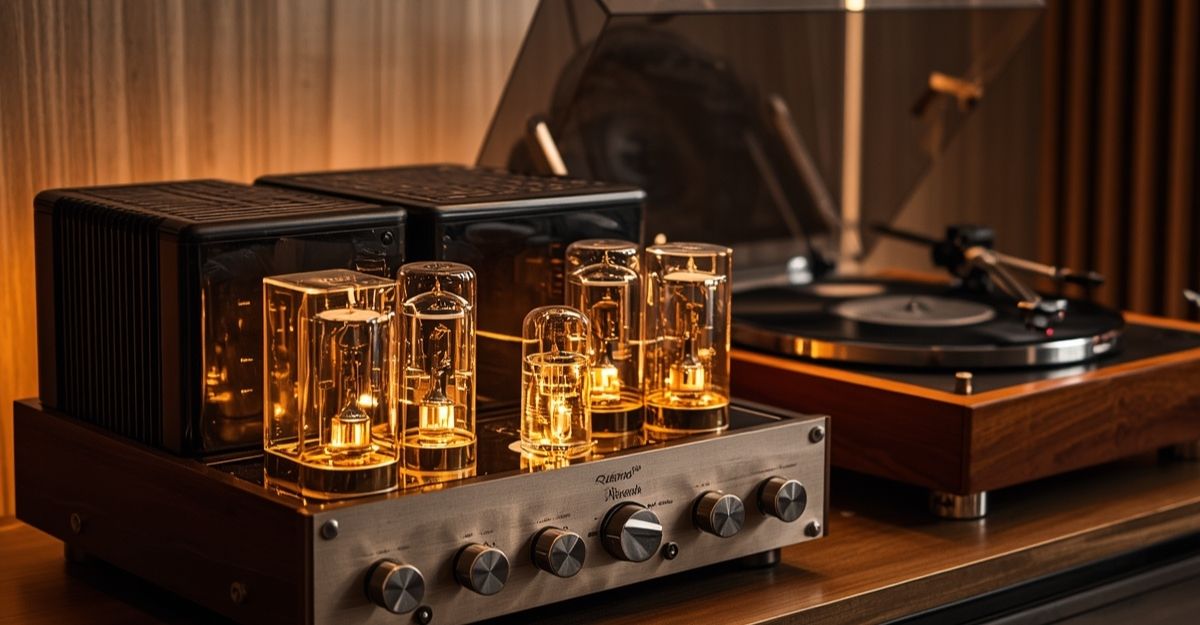
If there is one absolute non-negotiable status symbol among the modern audio aristocracy, it is the glowing green and blue interface of a McIntosh Laboratory amplifier.
Founded in 1949, McIntosh is the undisputed Rolex of the audio world. When you see a paparazzi shot inside a celebrity’s private home studio or living room, you will almost always spot their signature glass faceplates and exposed vacuum tubes. These aren’t just amplifiers; they are handcrafted pieces of industrial art.
The warmth that a McIntosh tube amplifier provides to a vinyl record is unparalleled. It strips away the clinical harshness of modern digital recordings and injects a lush, dynamic humanity back into the music. With entry-level stereo amplifiers starting around $5,000 and flagship reference systems easily crossing the $150,000 threshold, owning a McIntosh stack is the most direct way to signal your membership in the high-end audio community.
3. The Floor-Standing Monoliths: Klipsch Heritage Series
You cannot power a world-class amplifier into cheap speakers. For the true vintage club aesthetic, A-listers are turning to legendary, massive floor-standing speakers. The current reigning champion of the celebrity listening room is the Klipsch Heritage line, specifically the legendary Klipschorn or the Cornwall models.
These speakers are not designed to blend into the background. Standing waist-high and finished in premium, hand-matched walnut or cherry wood veneers, they command the physical space of a room. Sonically, they are designed using horn-loaded acoustics, a technology that mirrors the legendary, immersive sound systems found in the world’s most elite nightclubs.
When you sit in a custom leather Eames chair and listen to a classic nu-disco track or a 1970s jazz record through a set of Heritage speakers, you aren’t just hearing the music. You can physically feel the vibration of the bass guitar and the breath of the vocalist. It is a fully immersive, multi-sensory luxury experience that justifies the hefty five-figure price tags.
4. Boutique Rotary Mixers and the DJ Crossover
Because so much of 2026’s luxury lifestyle is heavily influenced by electronic music culture, the traditional home stereo receiver is frequently being replaced by boutique DJ equipment. As noted by publications like Resident Advisor, the resurgence of analog club culture has brought the rotary mixer into the luxury living room.
Brands like MasterSounds and Condesa build custom, handcrafted analog rotary mixers that take months to manufacture. Unlike standard digital DJ controllers with harsh crossfaders, these rotary mixers use smooth, weighted dials made of solid aluminum or bakelite.
Hollywood elites and off-duty festival headliners are placing these exquisite, wood-paneled mixers at the center of their home setups. It transforms the act of listening to music from a passive background activity into an active, tactile performance. It proves that the owner doesn’t just consume music—they curate it with the precision of a maestro.
5. Curating the Acoustic Luxury Environment
The final secret of the high-end listening experience is the room itself. You can spend $50,000 on vintage turntables and premium amplifiers, but if the room’s acoustics are poor, the investment is wasted.
In 2026, interior design and acoustic engineering have perfectly merged. Celebrities are hiring specialized acoustic architects to design their living spaces. This means incorporating premium, sound-dampening materials that look like high-end modern art. Think custom-slatted wooden acoustic panels, dense velvet draping, and strategically placed, heavy mid-century modern furniture that naturally breaks up soundwave reflections.
The ultimate listening room is a sanctuary. It is a space entirely disconnected from the notifications, screens, and digital noise of the outside world. It is a private temple dedicated to the pure, unadulterated worship of sound. The underground club kids of 2008 always knew that music was a religious experience; today’s Hollywood elite just have the budget to build the cathedral.
FAQ
To help our readers navigate the complex and highly expensive world of premium home audio, our editorial desk has compiled the most common questions about building a world-class listening room.
How much does it cost to join the audiophile elite?
While the term is subjective, joining the true audiophile elite in 2026 typically requires a baseline investment of $2,000 just for a high-quality, entry-level turntable or a set of premium bookshelf speakers. A fully curated, celebrity-tier listening room featuring flagship amplifiers and floor-standing speakers easily ranges from $20,000 to over $150,000.
Why do luxury audio systems still use vacuum tubes?
Despite being a decades-old technology, vacuum tubes (or “valves”) are highly prized in luxury audio for their acoustic profile. Unlike solid-state digital amplifiers, which can sound clinical or harsh, tube amplifiers introduce “even-order harmonics.” This creates a warm, rich, and highly musical sound that audiophiles strongly prefer, particularly when listening to analog vinyl.
What is a rotary mixer, and why are they so expensive?
A rotary mixer is a specialized analog audio mixer that uses weighted knobs (potentiometers) instead of sliding faders to blend music. They are favored by high-end DJs and luxury audio enthusiasts for their superior, studio-grade internal circuitry and smooth, gradual volume control. Because they are often hand-built in small batches, they command premium, high-ticket prices.
Do I need acoustic panels for a luxury home audio setup?
Yes. The physical dimensions and materials of your room impact the sound just as much as the speakers themselves. Elite listening rooms utilize acoustic panels, heavy rugs, and specific furniture placements to absorb echoing and diffuse soundwaves, ensuring the $10,000 speaker system actually performs at its maximum potential.

Sahil Chopra is a digital media specialist and the Managing Editor of Hercules & Love Affair. Backed by a formal diploma in Film & Television Direction from the Asian Academy of Film and Television (AAFT) and a degree in Business Management, Sahil combines his artistic vision with over four years of digital publishing expertise. He specializes in tracking the exact intersection where underground club culture meets high-end luxury lifestyle. Having closely followed the global electronic music scene from its early blog-era roots, Sahil now leads the editorial vision for the platform—curating everything from breaking entertainment news and VIP festival guides to exclusive looks inside celebrity culture. When he isn’t steering the newsroom, he is hunting down rare vinyl records and keeping a close eye on global fashion weeks.
3 thoughts on “Audiophile Elite: The $2,000+ Speaker Systems Hollywood A-Listers Swear By”
Comments are closed.