
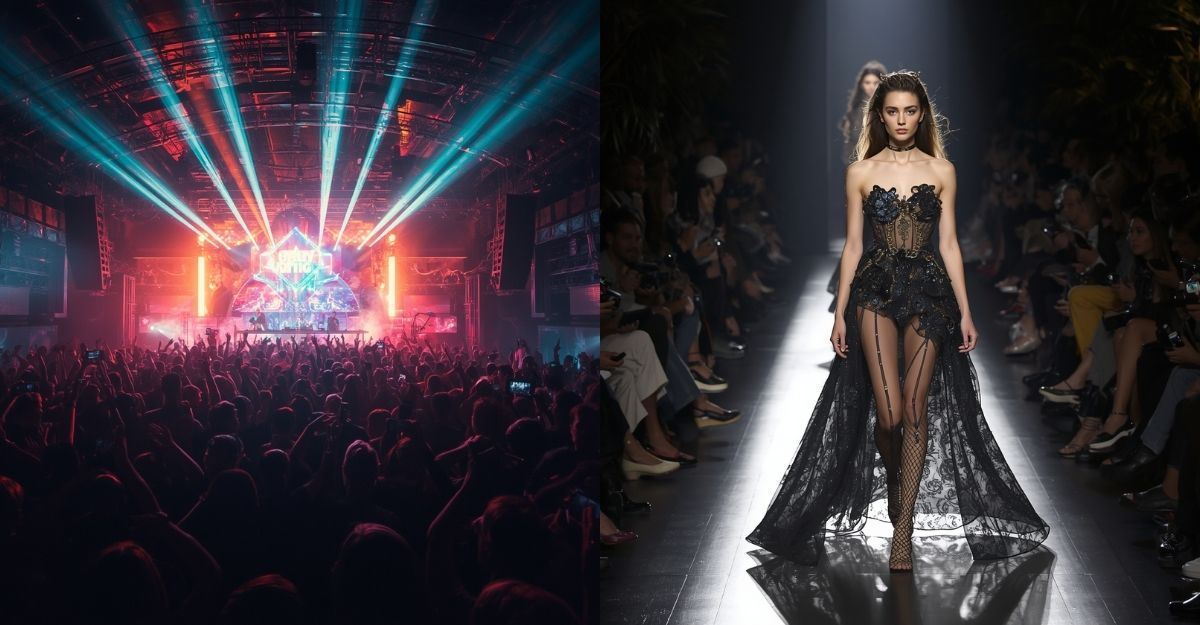
If you had told me fifteen years ago that the sweaty, pulsating basements of New York’s underground house scene would dictate the aesthetic of club culture high fashion in 2026, I would have laughed you out of the record store.
I’ve spent my life hunting down rare vinyl and tracking the heartbeat of global nightlife. I remember the raw, unpolished energy of the late 2000s—a time when electronic music was undergoing a massive, seismic shift. It was the era of indie-sleaze, nu-disco, and warehouse raves. It was a culture built on pure escapism, radical self-expression, and a distinct rejection of mainstream luxury.
But times change, and culture evolves. Today, the boundary between the underground DJ booth and the elite luxury runway has completely dissolved.
The producers who once hauled crates of records into dive bars are now composing original scores for Louis Vuitton and Balenciaga. The oversized rave silhouettes and metallic club-kid aesthetics of the past have been elevated, tailored, and draped over Hollywood’s A-list. Club culture didn’t just influence high fashion; it executed a total takeover.
Here is exactly how the underground electronic music scene evolved into the ultimate driving force behind 2026’s luxury lifestyle.
The 2008 Nu-Disco Revolution and the “Indie Sleaze” Aesthetic
To understand where high fashion is today, we have to look back at the cultural flashpoint of the late 2000s.
During this era, labels like DFA Records were redefining what dance music sounded—and looked—like. It was the birth of the nu-disco and dance-punk movement. One of the absolute cornerstones of this era was the groundbreaking project Hercules and Love Affair, spearheaded by DJ and producer Andy Butler.
When they dropped their eponymous debut album in 2008, featuring the mesmerizing, critically acclaimed track “Blind” with vocals by Anohni, it wasn’t just a musical revelation. It was a stylistic one. The aesthetic pulled heavily from 1970s New York disco, ancient Greek mythology, and queer club culture. It was avant-garde, theatrical, and fiercely independent.
At the time, the fashion world was watching. The “indie sleaze” look, characterized by metallic leggings, deep V-necks, oversized vintage eyewear, and a deliberate, glamorous messiness, was born on these dancefloors. It was the uniform of the after-party. Fast forward to the 2026 style revivals, and luxury houses are charging thousands of dollars to replicate the exact look we used to throw together for a $10 cover charge in Brooklyn.
The DJ as the Modern Fashion Icon
Historically, fashion houses relied on rock stars and Hollywood actors to serve as their muses. But as electronic music ballooned into a multi-billion-dollar global industry, the hierarchy of celebrity shifted.
Today, top-tier DJs and electronic music producers are the ultimate global tastemakers. The lifestyle of an elite DJ—jet-setting from Ibiza to Tokyo, curating VIP festival experiences, and moving seamlessly through high society—is the exact demographic luxury brands want to capture.
We are seeing this crossover everywhere in 2026:
- Runway Soundtracks: Elite European fashion weeks no longer rely on generic pop. They commission exclusive, techno-driven soundtracks from underground producers, turning fashion shows into high-end raves.
- Streetwear Meets Haute Couture: The utilitarian gear of the 90s and 00s raver—cargo pants, oversized technical jackets, and chunky sneakers—has been co-opted by luxury streetwear. Brands like Off-White, Prada, and Givenchy have fully integrated club-ready utility into their seasonal collections.
- The VIP Festival Uniform: Look at the VIP tents at Coachella or Tomorrowland. These spaces have replaced the traditional Hollywood red carpet as the premier destination for celebrity style. The outfits worn in these exclusive festival enclaves immediately dictate global fashion trends for the next six months.
The Vinyl Resurgence and the Aesthetics of Authenticity
As the Managing Editor of this platform, I spend a lot of time analyzing the intersection of luxury and authenticity. One of the most fascinating trends in 2026 high fashion is the fetishization of analog music culture.
In a world dominated by digital streaming and AI, “authenticity” has become the ultimate luxury commodity. This is why we are seeing fashion brands heavily incorporate the aesthetic of the crate-digger. High-end DJ bags, luxury vinyl carrying cases, and vintage-inspired analog headphone collaborations are flooding the market.
True luxury in 2026 isn’t just about wearing a recognizable logo; it’s about signaling that you have deep, esoteric cultural knowledge. Wearing a limited-edition jacket inspired by a legendary 1990s Berlin techno club is the ultimate cultural flex for the modern A-lister.
From the Dive Bar to the Met Gala: The Peak of Club Culture High Fashion
The ultimate proof of club culture’s victory over high fashion is the red carpet itself.
Look at recent Met Galas and elite European state events. The rigid, traditional tuxedo and the standard ballgown have been aggressively disrupted by avant-garde, club-inspired couture. We are seeing celebrities embrace the gender-fluid, boundary-pushing aesthetics that have always been native to underground dance floors. The use of synthetic materials, neon palettes, and architectural, rave-inspired silhouettes is no longer considered rebellious; it is the pinnacle of modern luxury.
The underground didn’t sell out. It leveled up. The music, the culture, and the fashion that once thrived in the dark have officially taken over the runway lights. And honestly? It’s about time.
To understand more about our history covering this scene, read our full About Us page.
FAQ
To help our readers navigate the fast-paced crossover between electronic music history and 2026 high fashion, we’ve compiled answers to the most common questions.
What is the “Indie Sleaze” fashion revival?
Indie sleaze refers to the messy, glamorous, party-centric aesthetic of the late 2000s and early 2010s, heavily associated with the blog-house and nu-disco music scenes. In 2026, high-fashion brands have revived this look, elevating vintage nightlife apparel into premium club culture high fashion.
How did the 2008 Nu-Disco scene influence modern fashion?
The 2008 nu-disco era, championed by artists like Andy Butler and DFA Records, brought theatricality, 70s disco glamour, and queer club culture back into the mainstream. Today’s designers frequently cite the unapologetic, expressive fashion of this specific musical era as a core inspiration for modern runway collections.
Why do luxury brands sponsor DJs and electronic music festivals?
Electronic music festivals and VIP nightlife venues have replaced traditional red carpets as the ultimate hubs for global youth culture and celebrity influence. Luxury brands sponsor DJs and outfit festival VIPs because it aligns their products with the high-energy, jet-setting lifestyle of the modern entertainment elite.
How has rave culture impacted 2026 streetwear?
Classic rave apparel—such as wide-leg utility pants, oversized technical jackets, reflective materials, and chunky footwear—has been entirely co-opted by luxury streetwear houses. What was once designed for practical comfort during 12-hour underground sets is now tailored with premium fabrics for the high-fashion consumer.

Sahil Chopra is a digital media specialist and the Managing Editor of Hercules & Love Affair. Backed by a formal diploma in Film & Television Direction from the Asian Academy of Film and Television (AAFT) and a degree in Business Management, Sahil combines his artistic vision with over four years of digital publishing expertise. He specializes in tracking the exact intersection where underground club culture meets high-end luxury lifestyle. Having closely followed the global electronic music scene from its early blog-era roots, Sahil now leads the editorial vision for the platform—curating everything from breaking entertainment news and VIP festival guides to exclusive looks inside celebrity culture. When he isn’t steering the newsroom, he is hunting down rare vinyl records and keeping a close eye on global fashion weeks.
4 thoughts on “From the Underground to the Runway: How Club Culture Took Over High Fashion”
Comments are closed.