
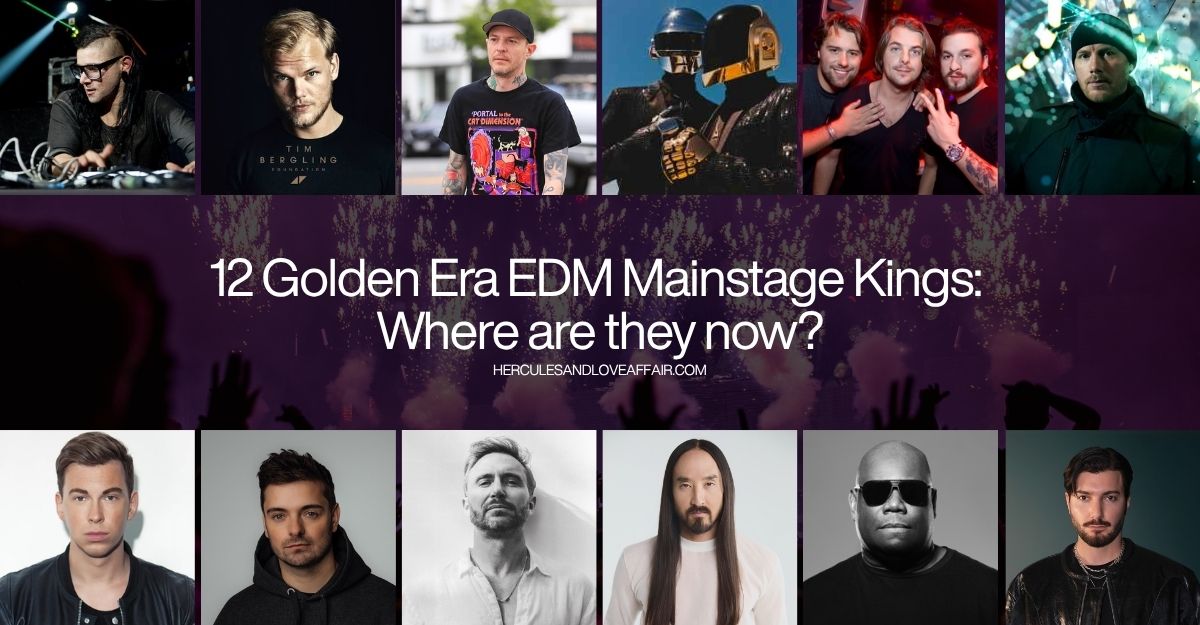
If you close your eyes, you can probably still hear it. But for me, it wasn’t just about hearing the music it was about feeling it.
Back in the early 2010s, my nights were entirely consumed by watching low-res YouTube live streams of Ultra and Tomorrowland. I was so obsessed with the euphoric energy of Avicii, Hardwell, and TJR that my standard computer speakers simply couldn’t cut it. I needed to bring the mainstage into my room. I asked a producer friend for advice on upgrading my setup, and the debate came down to two legendary studio monitors: the clinical Yamaha HS80s or the heavy-hitting KRK Rokit 8s.
I ultimately chose the Rokit 8s. I loved the iconic yellow-cone design, but more importantly, they delivered the exact, chest-thumping bass that those Big Room anthems demanded. And when I finally had to leave the house, the soundtrack came with me on my trusty Marshall Kilburn portable speaker. That wasn’t just music to me; it was an entire era.
The period between 2010 and 2017 is universally regarded as the “Golden Era” of Electronic Dance Music (EDM). It was a cultural reset that took underground club beats and turned them into global stadium anthems. We forged deep, emotional connections to these tracks—they were the soundtracks to our best summers, our road trips, and our youth.
Today, the landscape of luxury clubbing and our DJ Rich List looks vastly different. Some of our favorite architects of the Golden Era evolved their sound, some walked away from the stage entirely, and tragically, some left us far too soon.
This is a deep dive into the artists who defined a generation. From the emotional melodies of Avicii to the thunderous kicks of Hardwell, let’s look back at the anthems that shaped us, the incredible wealth these DJs amassed, and where they are today.
1. The Legends We Lost & The Icons Who Retired
Nostalgia in dance music is heavily driven by the artists we can no longer see live. Their music has become frozen in time, capturing the pure, unadulterated joy of the 2010s.
Avicii (Tim Bergling):
No artist defined the emotional core of the Golden Era quite like Avicii. He didn’t just make dance music; he wrote generational anthems. Tracks like “Levels” and “Wake Me Up” bridged the gap between electronic production and organic, acoustic songwriting. His tragic passing in 2018 left a permanent void in the industry. Today, his estate continues to preserve his legacy, managing his estimated $50 million fortune to fund mental health initiatives for youth. Whenever an Avicii track plays at a festival today, the entire crowd sings every word—a testament to his immortal impact. Also, in recent times, the voice behind the shadows came to light: “Jenny Lindfors” revealed that she is the long-rumored vocalist behind the beloved Avicii ID.
Daft Punk:
The mysterious French robotic duo didn’t just participate in the EDM boom; they laid the groundwork for it. Their legendary 2006 Coachella pyramid performance birthed the modern mainstage. When they officially announced their retirement in 2021, the world mourned the end of an era. With a combined net worth estimated at $140 million, Thomas Bangalter and Guy-Manuel de Homem-Christo have quietly stepped into the shadows, leaving behind untouchable masterpieces like “One More Time.”
2. The Return of the Big-Room Kings
Between 2013 and 2015, “Big Room” house was the inescapable sound of the festival circuit. It was loud, aggressive, and designed for massive crowds.
Hardwell:
Robbert van de Corput, known globally as Hardwell, was the undisputed king of this era. Tracks like “Spaceman” and his legendary Tomorrowland 2013 set became the blueprint for EDM. However, the relentless touring took its toll. In 2018, Hardwell famously announced an indefinite hiatus to protect his mental health. Fast forward to today: Hardwell has triumphantly returned, debuting a darker, “Big Room Techno” sound. He protected his peace, maintained his $24 million net worth, and successfully evolved.
Swedish House Mafia:
Axwell, Sebastian Ingrosso, and Steve Angello broke our hearts when they embarked on their “One Last Tour” in 2013. They were the Beatles of EDM, delivering emotional, progressive masterpieces like “Don’t You Worry Child.” While they pursued highly successful solo projects, the trio finally reunited. Today, they are back on the road, holding down massive Ibiza residencies and proving their $100M+ combined net worth is well-deserved.
3. The Mainstage Titans Who Never Left
Some artists from the Golden Era didn’t leave; they simply shape-shifted to survive the changing tides of the music industry.
David Guetta:
Often called the grandfather of pop-EDM, Guetta (net worth ~$200 million) was the bridge that brought urban and pop vocals to club beats. While fans miss the nostalgic 2011 “Titanium” era, Guetta smartly pivoted in the 2020s, launching his “Future Rave” sound to dominate the underground while still churning out radio hits.
Martin Garrix:
He exploded onto the scene in 2013 as a teenager with “Animals.” He was the face of the young, vibrant EDM explosion. Today, Garrix (net worth ~$50 million) is a seasoned veteran. He runs his own label, STMPD RCRDS, and focuses on high-emotion progressive house, ensuring the euphoric feeling of the 2010s never truly dies.
4. The God of the Drop: Skrillex (Sonny Moore)
My favorite DJ of all time, Skrillex (his real name Sonny Moore)—how can we forget about the god of DJs? During the peak of the Golden Era, no single artist disrupted the electronic music ecosystem quite like him.
Before he was commanding mainstages, Sonny Moore was the frontman for the post-hardcore band From First to Last. That punk-rock, emo ethos never left him; he simply traded his guitar for a laptop. When he dropped the Scary Monsters and Nice Sprites EP in 2010, he single-handedly dragged dubstep out of the UK underground and weaponized it for massive American audiences. The sound was abrasive, chaotic, and completely revolutionary.
Back then, my KRK Rokit 8 monitors used to physically shake off my desk when his bass drops hit. Today, I still keep his golden-era tracks in heavy rotation, but the hardware has evolved. I keep my Apple AirPods Max handy wherever I go. While I’ll swap to lighter, sweat-proof earbuds when I’m out for a heavy run, for pure, unadulterated bass depth and immersive listening while traveling or working, the AirPods Max remain my absolute top pick. Hearing the sheer complexity of Skrillex’s sound design on high-fidelity spatial audio proves that his early tracks weren’t just noise; they were genius.
The Iconic MacBook Smashing Lore
With his meteoric rise came massive scrutiny. Traditional musicians and techno purists constantly accused Skrillex of “just pressing play” on a MacBook. But Skrillex silenced his critics through sheer, undeniable live energy—and one of the most iconic, chaotic pieces of EDM lore ever caught on camera.
During an Easter Friday show in New Zealand in 2011, Skrillex was playing a supporting set alongside his then-mentor, deadmau5. Mid-set, a drink was spilled on his laptop, causing his audio to crash entirely. In a fit of pure, punk-rock rage and frustration, Skrillex famously picked up the broken MacBook Pro and completely smashed it on stage, throwing the remains into the crowd.
Deadmau5 later recounted the hilarious, unhinged moment in interviews, cementing the video clip as legendary internet folklore. Skrillex simply grabbed his backup gear (or an iPod, according to some fans in attendance) and kept the party going. It proved a vital point: the gear didn’t matter. It was about the energy he brought to the room.
Breaking Records with Diplo (Jack Ü)
As the aggressive “brostep” era began to wane, Skrillex proved his genius by completely reinventing his sound. In 2013, he teamed up with Mad Decent boss Diplo to form the super-duo Jack Ü.
Their collaboration absolutely broke the records of what dance music could achieve. Jack Ü threw out the EDM rulebook, blending trap, dancehall, and experimental pop into a sound that no one had ever heard before. They were notorious for their chaotic live shows, culminating in an infamous 24-hour live-streamed DJ set that got shut down by the police. But their biggest disruption was yet to come.
Justin Bieber Enters the Picture
When Jack Ü brought Justin Bieber into the picture, it permanently changed the trajectory of both artists’ careers and the landscape of modern pop music.
Bieber was at a controversial low point in his career, struggling with his public image. Skrillex and Diplo took a raw, vulnerable piano ballad from Bieber and completely transformed it. They pitched up Bieber’s vocals, distorted them into a flute-like synthesizer, and created “Where Are Ü Now.“ The track was a cultural phenomenon. It dominated global radio, won a Grammy Award for Best Dance Recording, and successfully rebranded Justin Bieber as a mature, respected pop-R&B artist. Skrillex’s production was so flawless that he became the most sought-after super-producer in the world, going on to craft hits for The Weeknd, Rick Ross, and Incubus.
The Hiatus and the Triumphant 2026 Status
After years of relentless touring, Skrillex quietly stepped away from the spotlight. He took a massive hiatus to focus on his mental health, his personal life, and perfecting his craft in the studio. For years, fans begged for his return.
When he finally came back in 2023 with the release of Quest For Fire and Don’t Get Too Close, he once again rewrote the rules. Teaming up with Fred again.. and Four Tet, Skrillex traded the aggressive dubstep drops for refined, UK-garage and bass-heavy masterpieces like “Rumble.” The trio famously sold out Madison Square Garden in three minutes and closed out Coachella, proving that Sonny Moore’s cultural dominance is bulletproof.
Today, with an estimated net worth of over $70 million, Skrillex remains the ultimate chameleon of electronic music. He survived the end of the Golden Era by never repeating himself, cementing his status as the true god of the modern DJ scene.
The Golden Era DJs
To truly track the architects of the 2010s, we have compiled the definitive breakdown of their wealth, their most iconic defining track, and their 2026 status.
| Artist / Duo | Est. Net Worth | The Defining Golden Era Anthem | 2026 Status & Whereabouts |
| Avicii | $50 Million* | “Levels” (2011) | Passed away in 2018. Legacy preserved via mental health foundations. |
| Skrillex | $70 Million | “Scary Monsters and Nice Sprites” (2010) | Active; currently pioneering UK bass/garage sounds alongside Four Tet and Fred again.. |
| Daft Punk | $140 Million | “One More Time” (2000) | Officially retired in 2021. |
| Swedish House Mafia | $100 Million+ | “Don’t You Worry Child” (2012) | Reunited; currently dominating global stadium tours and Ibiza. |
| Hardwell | $24 Million | “Spaceman” (2012) | Returned from hiatus; pioneering a new “Big Room Techno” sound. |
| David Guetta | $200 Million | “Titanium” (2011) | Active; currently leading the “Future Rave” movement. |
| Martin Garrix | $50 Million | “Animals” (2013) | Active; STMPD RCRDS boss and progressive house titan. |
| Alesso | $40 Million | “Calling (Lose My Mind)” (2012) | Active; producing darker club tracks and pop crossovers. |
| Steve Aoki | $120 Million | “Pursuit of Happiness (Remix)” | Active; cake-throwing legend turned tech/crypto entrepreneur. |
| Carl Cox | $16 Million | “I Want You (Forever)” | Active; the undisputed King of Ibiza playing analog/vinyl sets. |
| Eric Prydz | $10 Million | “Opus” (2015) | Active; pushing the boundaries of live AV shows with his HOLO concept. |
*Net worth at the time of passing/estate valuation.
The Legacy Lives On
The beauty of the 2010–2017 EDM era is that the music was designed to be immortal. The genre was built on the idea of community, unity, and shared euphoria.
While we deeply miss the anticipation of waiting for an unreleased Avicii ID to drop, or the sheer adrenaline of hearing a classic Blasterjaxx or TJR horn-synth for the first time, those memories are permanently etched into global festival culture. The artists who built the foundation have either moved on to protect their peace or evolved to guide the next generation. But anytime a DJ drops “Levels” or “Where Are Ü Now” on a modern mainstage, for four minutes, we are all back in the Golden Era.
FAQ
Did Skrillex actually smash his MacBook on stage?
Yes. During a 2011 show in New Zealand, Skrillex’s laptop audio crashed after a drink was spilled on it. In a moment of pure frustration, he picked up the broken MacBook and smashed it on stage, resulting in a legendary viral video that deadmau5 later joked about in interviews.
Why did the “Big Room” EDM era end?
The Golden Era of EDM naturally evolved as musical tastes shifted. Listeners began seeking more groove-oriented genres like Tech House or darker, faster genres like Hard Techno, prompting mainstage artists to adapt their sounds.
What is Avicii’s most famous song?
While he had countless hits, “Levels” (2011) and “Wake Me Up” (2013) are widely considered Avicii’s most iconic tracks, fundamentally changing the landscape of electronic and pop music.
Are Swedish House Mafia still together?
Yes. After their famous farewell tour in 2013, Axwell, Sebastian Ingrosso, and Steve Angello officially reunited in 2018. They released a new album, Paradise Again, and are actively touring in 2026.
Why did Hardwell stop DJing?
In 2018, Hardwell announced an indefinite hiatus from touring, citing extreme burnout and a need to focus on his personal life and mental health. He made a highly celebrated return to the stage at Ultra Music Festival in 2022.
Who is the richest DJ from the EDM era?
David Guetta and Calvin Harris consistently top the wealth charts from this era. David Guetta has an estimated net worth of over $200 million, while Calvin Harris sits at an estimated $300 million+.

Sahil Chopra is a digital media specialist and the Managing Editor of Hercules & Love Affair. Backed by a formal diploma in Film & Television Direction from the Asian Academy of Film and Television (AAFT) and a degree in Business Management, Sahil combines his artistic vision with over four years of digital publishing expertise. He specializes in tracking the exact intersection where underground club culture meets high-end luxury lifestyle. Having closely followed the global electronic music scene from its early blog-era roots, Sahil now leads the editorial vision for the platform—curating everything from breaking entertainment news and VIP festival guides to exclusive looks inside celebrity culture. When he isn’t steering the newsroom, he is hunting down rare vinyl records and keeping a close eye on global fashion weeks.
6 thoughts on “Chasing the Drop: The Golden Era EDM Titans We Miss (And Where They Are Now)”
Comments are closed.