
The global electronic music landscape is experiencing a profound structural shift. While the rapid-fire release cycle of the streaming era demands constant novelty, the biggest mainstages, club charts, and streaming playlists are increasingly dominated by a familiar sonic palette. Producers are no longer simply hunting for obscure sample chops or micro-dosing on retro aesthetics. Instead, the industry is witnessing a wave of full-scale, authorized covers and interpolations that draw directly from legacy synth-pop and alternative catalogs of the late 1980s and early 1990s.
This trend underscores a calculated alignment between artistic reverence, algorithmic engineering, and intellectual property monetization. By analyzing recent landscape-defining releases, we can unpack the structural mechanics behind why the modern live circuit is leaning so heavily on historical pop foundations.
1. The Financial and Algorithmic Imperative of Familiar Hooks
To understand the proliferation of legacy covers, one must first look at the harsh realities of streaming mechanics. In an ecosystem where millions of songs are uploaded annually, breaking a completely original top-line melody to a global audience requires immense capital and marketing luck. For major labels and independent distributors alike, leveraging an existing, globally recognized melody represents a significant reduction in financial risk.
From an algorithmic standpoint, familiarity acts as a critical optimization metric. Platforms utilize skip-rate percentages within the initial thirty seconds of a track to determine playlist longevity. When a listener encounters a modern tech-house or progressive bassline married to a universally known vocal hook, the psychological barrier to entry drops instantly. The skip rate plummets, signaling to recommendation engines that the track possesses high retention value.
Furthermore, this trend aligns with the broader institutional financialization of music catalogs. Private equity firms and major publishing groups have spent billions acquiring the master rights to iconic catalogs over the past decade. To generate a return on these massive investments, these entities actively encourage electronic music producers to breathe fresh life into their intellectual property, introducing decades-old master recordings to a completely new generation of ravers.
2. Case Study: Armin van Buuren, Silver Panda, and the Shadow of Depeche Mode
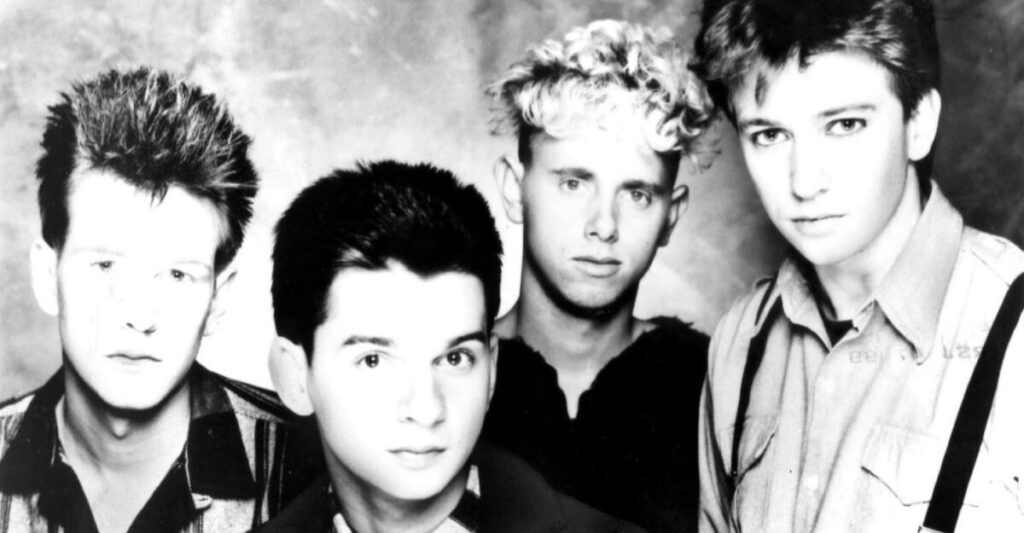
The most potent manifestation of this catalog revival is found at the intersection of progressive trance and modern melodic techno. A prime example is the high-profile release from Armin van Buuren and Silver Panda, who have fully reimagined the iconic 1990 Depeche Mode masterpiece, “Enjoy the Silence.”
The original production by Depeche Mode was defined by Martin Gore’s melancholic songwriting and Alan Wilder’s moody, analog synthesizer arrangements. It was a track that bridged the gap between stadium rock and underground synth-pop.
In their updated version, the production team extracts the haunting, foundational vocal stem and wraps it around an aggressive, late-night peak-time infrastructure. The organic acoustic guitar strums of the original are stripped away, replaced by standard driving, sawtooth basslines and sharp, hypnotic arpeggios tailored specifically for massive festival sound systems.
This release exemplifies the core objective of the modern legacy cover: it retains the emotional gravitas of the source material while completely replacing the vintage sonic architecture with contemporary club dynamics. The result is a hybrid track that triggers deep nostalgia in older demographics while simultaneously serving as a high-octane weapon for younger audiences on the live circuit. You can read the technical release details on the Armin van Buuren and Silver Panda Depeche Mode Classic Feature.
3. Case Study: Fatboy Slim and Felix da Housecat Bridging Genres
The lineage of alternative catalog interpolation extends far beyond progressive tech-house. It is deeply woven into the fabric of traditional club genres like Chicago house and UK big beat. The collaborative effort between Fatboy Slim, Felix da Housecat, and Carola on their single “Funk Drunk” offers an insightful counter-perspective to the melodic techno boom.
Rather than delivering a dark, moody stadium anthem, this production team utilizes a bouncy, groove-heavy architecture to merge disparate eras of alternative pop and dance heritage. By blending the raw, stripped-back Jack-classic philosophy of Chicago house with the explosive, sample-driven dynamics of Brighton big beat, the track demonstrates how legacy catalogs can be leveraged for rhythm and attitude rather than just radio-friendly melodies. For an extensive look into the session composition, explore the Fatboy Slim and Felix da Housecat Funk Drunk Breakdown.
This method relies on structural interpolation rather than a straightforward cover. It shows that whether an artist is executing a direct, vocal-led festival piece or an underground club groove, the historical archives of alternative music remain the premier source of inspiration for modern electronic music networks.
4. The Roots of Alternative Vocal House and Synth-Pop Preservation
While major commercial networks have recently latched onto this trend, the process of elevating underground synth-pop roots and vintage alternative pop into a cohesive editorial vision is not a new phenomenon. Independent collectives have spent decades asserting that the sonic subcultures of the 1980s are directly responsible for the health of contemporary club music.
For a historic perspective on how these subcultures originally converged, our internal database tracks these exact evolutionary lines across our comprehensive Hercules and Love Affair Legacy Archive.
[1980s Synth-Pop / New Wave] ──► [1990s Underground Vocal House] ──► [2020s Mainstage Melodic Techno]
      (Depeche Mode / Kraftwerk)             (Classic Chicago Club Mixes)           (Festival Re-Covers / Covers)
By viewing modern music through this historical lens, it becomes clear that current festival crossovers are simply the latest chapter in a long-standing dialogue. When producers respect the source material, these releases serve as important acts of cultural preservation, ensuring that the foundational work of underground pioneers remains an active, breathing part of the modern live performance matrix.
5. Curation vs. Commercial Laziness: The Creative Compromise
As alternative catalog covers continue to saturate major streaming platforms, a fierce debate has emerged within our real-time music news tracking forums regarding the creative validity of this trend. Critics argue that the heavy reliance on pre-existing hit melodies points to a systemic creative stagnation within the commercial electronic scene, where producers favor guaranteed streaming metrics over genuine sonic experimentation.
However, executing a successful catalog reimagining requires an intricate understanding of modern sound design. The producers tasked with these projects must seamlessly translate analog synthesizer frequencies from the 1980s into the digital, sub-bass heavy environments of 2026 club systems. When done correctly, this process functions as an elite form of musical curation.
Moreover, this trend provides a vital financial pipeline that supports the broader live ecosystem. The revenue generated from high-profile catalog covers frequently trickles down to fund grassroots creative spaces, providing crucial exposure and resources that directly benefit developing independent acts. To discover the fresh talent navigating these complex commercial and independent live landscapes, check out our active quarterly index of the rising underground DJs defining the 2026 festival season.
Comparative Production Architecture Matrix
To understand how drastically these legacy catalogs are altered for modern festival environments, our editorial desk analyzed the structural deviations between vintage compositions and their modern electronic counterparts:
| Technical Parameter | Vintage Catalog Architecture (1985–1993) | Modern Mainstage Electronic Architecture (2026) |
| Primary Synthesizer Engine | Analog hardware (Roland Juno-106, Sequential Circuits Prophet-5). | Digital wavetable/software synthesizers (Serum, Vital, custom digital racks). |
| Rhythmic Cadence | Varied, human-quantized drum machine patterns (LinnDrum, Roland TR-808). | Strict, digitally grid-locked 4/4 structures with automated sidechain compression. |
| Low-End Frequency Allocation | Striped bass guitar or sub-muted analog synth bass lines (50Hz – 100Hz). | Heavily saturated, mono-compatible sub-bass drops occupying the 20Hz – 45Hz range. |
| Vocal Production | Raw, dynamic microphone takes with natural room acoustics and tape saturation. | Heavily processed, pitch-corrected, time-aligned stems with digital delay and stereo widening. |
| Arrangement Goal | Dynamic radio progression leading to an emotional or structural bridge. | Extended operational intros/outros engineered specifically for seamless DJ transition mapping. |
The Final Verdict
The ongoing reliance on legacy synth-pop catalogs is a permanent structural fixture of modern electronic music. As live events continue to scale into multi-billion dollar global industries, the need for universal, cross-generational anchor points becomes an operational necessity for major festival promoters.
The true test of the catalog revival trend will lie in structural balance. As long as commercial electronic artists use the momentum of these legendary hooks to build portals that link audiences back to the underground roots of alternative dance heritage, the loop remains healthy, vibrant, and profoundly influential.

Sahil Chopra is a digital media specialist and the Managing Editor of Hercules & Love Affair. Backed by a formal diploma in Film & Television Direction from the Asian Academy of Film and Television (AAFT) and a degree in Business Management, Sahil combines his artistic vision with over four years of digital publishing expertise. He specializes in tracking the exact intersection where underground club culture meets high-end luxury lifestyle. Having closely followed the global electronic music scene from its early blog-era roots, Sahil now leads the editorial vision for the platform—curating everything from breaking entertainment news and VIP festival guides to exclusive looks inside celebrity culture. When he isn’t steering the newsroom, he is hunting down rare vinyl records and keeping a close eye on global fashion weeks.